
A Second Chance Under Ohio Law: Understanding ILC in Hamilton County
Key Takeaways: Intervention in lieu of conviction (ILC) in Cincinnati is a statutory alternative under Ohio Revised Code § 2951.041 allowing certain defendants to complete court-approved treatment instead of receiving a criminal conviction. The request must be filed before a guilty plea and requires waiving speedy trial, preliminary hearing, grand jury timing, and arraignment protections. Eligibility depends on judicial findings, including no prior felony violence conviction and assessment by a licensed provider. The court may reject requests without a hearing. Qualifying factors include drug/alcohol usage, mental illness, intellectual disability, or being a victim of human trafficking or compelling prostitution. Successful completion is without adjudication of guilt, and the court dismisses proceedings, though record sealing is discretionary and separate. Noncompliance triggers a hearing that can lead to a guilty finding and sentencing.
Intervention in lieu of conviction (ILC), or treatment in lieu of conviction, allows certain defendants to complete court-approved intervention plans instead of being convicted. Under Ohio Revised Code § 2951.041(A)(1), if drug or alcohol usage contributed to criminal behavior, the court may accept the offender’s request for intervention prior to a guilty plea. The statute extends to mental illness, intellectual disability, and status as a victim of human trafficking or compelling prostitution. For people charged in Cincinnati and Hamilton County, ILC can be one of the most meaningful paths to avoid a felony conviction in Ohio, though eligibility is narrow.
If you or a family member is facing charges and wondering whether ILC is realistic, the team at Yonas & Phillabaum is available to review your situation. Call 513-427-6100 or reach out to our team today to discuss how Ohio’s intervention statute may apply to your case.
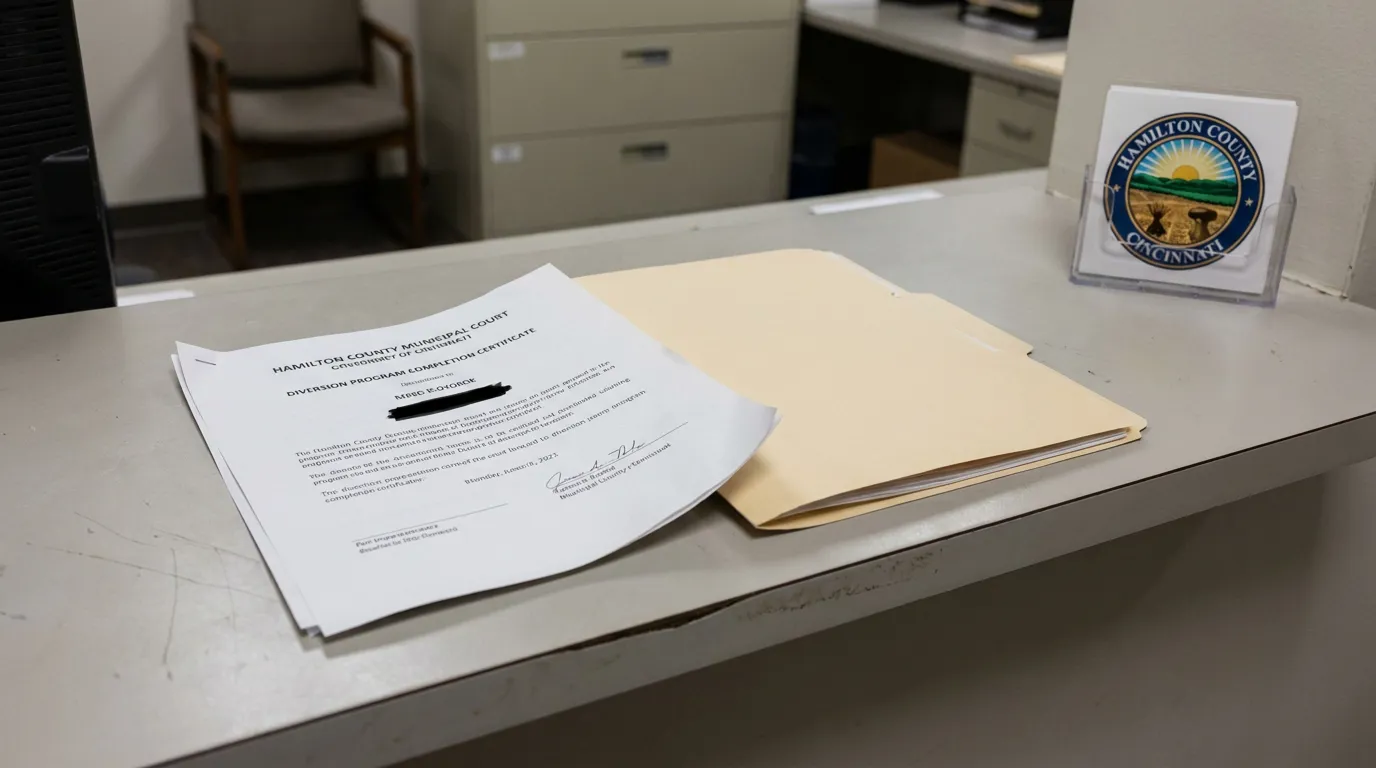
How Intervention in Lieu of Conviction in Ohio Actually Works
The process begins with a formal written request filed before any guilty plea is entered. Under Ohio’s community control and intervention statute, the request must identify the underlying factor contributing to the offense, drug or alcohol usage, mental illness, intellectual disability, or being a victim of R.C. 2905.32 or R.C. 2907.21. Timing matters because the statute conditions the court’s authority on accepting the request prior to a guilty plea.
The court retains substantial discretion at every stage. Ohio Revised Code § 2951.041(A) provides that the court may reject a request without a hearing. If the court considers the request, it must schedule an eligibility hearing, stay all criminal proceedings pending the outcome, and order an assessment by an appropriately licensed provider to determine eligibility and recommend an intervention plan.
Requesting ILC requires giving up meaningful procedural protections. The request must include a waiver of the defendant’s right to speedy trial, preliminary hearing, grand jury timing, and arraignment unless already occurred. These waivers are significant and should be weighed carefully against the strength of the state’s evidence. If suppression issues or proof problems exist, a defendant may be trading away leverage that could otherwise resolve the case.
Who May Qualify for ILC in Cincinnati
Eligibility under ORC 2951.041 requires specific statutory findings. Ohio Revised Code § 2951.041(B) conditions eligibility on findings that the offender has not been convicted of or pleaded guilty to any felony offense of violence and has been assessed by an appropriately licensed provider. The statute limits eligibility based on the charged offense, excludes certain offenses outright (including OVI and various offenses involving minors or physical harm), and imposes additional conditions tied to prior record and mandatory prison terms.
Common threshold issues courts consider include:
- Whether the charged offense falls within an excluded category
- Whether the defendant’s prior record includes a felony offense of violence
- Whether a licensed provider’s assessment supports the conclusion that the underlying factor contributed to the criminal behavior
- Whether the proposed intervention plan is realistic given the defendant’s circumstances
💡 Pro Tip: Gathering treatment records, provider intake documentation, and proof of voluntary engagement in counseling before the eligibility hearing can strengthen the picture presented to the court, though no documentation guarantees admission into the program.
The Payoff: What Successful Completion Means
The central benefit of ILC is avoiding a criminal conviction. Ohio Revised Code § 2951.041 provides that successful completion of the intervention plan shall be without adjudication of guilt and is not a criminal conviction, and the court shall dismiss the proceedings. Sealing or expungement of related records is addressed separately, generally rests in the court’s discretion, and follows referenced statutory procedures.
That distinction carries real weight for collateral consequences. Employment applications, professional licensing, housing screening, and immigration consequences frequently turn on whether an adjudication of guilt exists, though some agencies and federal immigration authorities may still inquire about arrests or charges regardless of disposition. Because sealing and expungement are procedurally distinct from dismissal, records do not disappear automatically upon completion.
ILC Compared With Other Diversion Options
| Feature | Intervention in Lieu of Conviction | Traditional Plea and Sentence |
|---|---|---|
| Guilty plea entered? | Request made before plea; plea may be entered later if the defendant fails | Plea entered and accepted |
| Adjudication of guilt | None upon successful completion | Yes |
| Record relief | Court may order sealing or expungement | Limited, subject to separate statutes |
| Court discretion | Broad; request may be rejected without a hearing | Governed by plea and sentencing rules |
ILC is not the only alternative disposition available locally. Some defendants may be better positioned for Hamilton County’s pretrial diversion program, which operates under different criteria.
What Happens If Someone Falls Short of the Plan
Noncompliance triggers a defined statutory process. Under Ohio Revised Code § 2951.041, if the offender fails to comply with any term or condition of the intervention plan, the supervising authority shall advise the court, and the court shall hold a hearing to determine whether the offender failed to comply. Representation at that stage is generally important.
The consequences of an adverse finding can be significant. If the court finds noncompliance, it may enter a finding of guilty and impose an appropriate sanction under Chapter 2929, which is the outcome ILC was intended to avoid. The court also has authority to continue the offender on intervention with modified terms, so a violation does not always end the program, though courts vary in their approach.
Practical Challenges Defendants Often Encounter
Compliance obligations are often more demanding than people expect. Intervention plans may involve treatment attendance, testing, supervision reporting, and a required period of abstinence, all while maintaining employment and family responsibilities. The statute contemplates an intervention period of at least one year and may extend longer. Transportation, work schedules, and treatment provider availability are recurring friction points in Greater Cincinnati.
Honest communication with counsel and the supervising authority matters. Problems disclosed early are often more manageable than those discovered through a failed screen or missed report. A criminal defense attorney cincinnati residents rely on can help address compliance issues before they escalate into a formal noncompliance hearing.
💡 Pro Tip: Keep your own written record of every appointment, screen, and treatment session. If a dispute over compliance arises, contemporaneous documentation can be far more persuasive than memory.
Why Legal Strategy Comes Before the Application
ILC should be evaluated alongside, not instead of, traditional defense analysis. Before waiving speedy trial rights and other protections, examine probable cause for the stop or search, admissibility of evidence, chain of custody on lab results, and sufficiency of the state’s proof. In some cases, a suppression motion may resolve the matter more favorably than any diversion program.
Presumption of innocence remains the starting point. Courts commonly require an offender to enter a guilty plea held in abeyance as a condition of granting intervention, so the process is not neutral, and the statutory framework and waivers carry real consequences if the plan is not completed.
Frequently Asked Questions
1. Is ILC available for every criminal charge in Ohio?
No. Ohio Revised Code § 2951.041(B) sets out specific eligibility findings a court must make, including that the offender has not been convicted of or pleaded guilty to any felony offense of violence, and the statute expressly excludes numerous offenses and offense categories. Eligibility should be assessed against the current statutory text in every case.
2. Does the court have to grant my request if I meet the criteria?
No. The statute provides that the court may reject a request without a hearing, and even defendants who satisfy every listed eligibility finding are subject to judicial discretion. Meeting the statutory criteria may open the door, but it does not compel a particular result.
3. Will my record be cleared after I finish the program?
Successful completion is without adjudication of guilt and is not a criminal conviction, and the court dismisses the proceedings. Sealing or expungement of related records is a separate matter that is generally discretionary, so confirm that appropriate orders are requested and entered.
4. What if I miss treatment sessions or fail a drug screen?
The supervising authority must advise the court, and the court will hold a hearing to determine whether you failed to comply. If a violation is found, the court may continue intervention with modified conditions or enter a finding of guilty and proceed to sentencing, depending on the violation’s nature, your overall progress, and the court’s assessment.
5. When do I need to raise ILC in my case?
The request must be made and accepted prior to a guilty plea. Because the statutory language of Ohio’s ILC provision has been amended over time, the version applicable to your offense date may matter, which is one reason early consultation is valuable.
Weighing Your Options Before the Window Closes
Intervention in lieu of conviction offers a statutorily authorized path toward dismissal and potential record relief for defendants whose substance use, mental illness, intellectual disability, or victimization contributed to a criminal charge. The framework is demanding: the request must come before a guilty plea, it requires waiving significant procedural rights, eligibility depends on specific judicial findings and statutory offense exclusions, and noncompliance can result in a guilty finding and sentencing. Every case turns on its own facts.
If you are considering drug treatment diversion in Ohio or want a candid assessment of whether ILC fits your circumstances, Yonas & Phillabaum is ready to help. Call 513-427-6100 or schedule a consultation now to talk through your options before critical deadlines pass.
This is not legal advice; this is a legal advertisement.