What Cincinnati Drivers Need to Know About Restricted Plates After a High BAC Arrest
Key Takeaways: Restricted "party plates" are required in Cincinnati high-test OVI cases when statutory conditions are met. Ohio Revised Code § 4511.19 defines the 0.17 breath alcohol threshold, § 4510.13 governs limited driving privileges, and § 4503.231 establishes restricted plates. When qualifying divisions apply, courts must impose the plate condition with limited driving privileges. A narrow employment exception under § 4503.231(B) applies to employer-owned vehicles. The best opportunity to influence the outcome comes early, while the charge and chemical evidence can be challenged.
If you were arrested in Hamilton County with a breath test at or above 0.17, restricted "party plates" are generally not optional once a court grants limited driving privileges. Ohio’s restricted plate rules sit at the intersection of three statutes: ORC § 4511.19 (the OVI offense), ORC § 4510.13 (limited driving privileges), and ORC § 4503.231 (the plates themselves). Whether the trigger applies depends on the division charged, your record, and the disposition achieved.
If you are facing a high-test OVI charge and want to understand how a mandatory plate order might affect your job, commute, and insurance, the team at Yonas & Phillabaum is available to discuss your situation. Call 513-427-6100 or contact us now to schedule a confidential consultation with a Cincinnati OVI lawyer.
Understanding the Ohio Party Plates OVI Rule
Ohio’s "party plates" are officially called restricted license plates. They are established under ORC § 4503.231. Because Chapter 4503 governs motor vehicle registration statewide, its provisions apply uniformly to drivers in Cincinnati and Hamilton County.
The statute describes exactly what these plates are and why they exist. Under ORC § 4503.231(A), vehicles registered to persons whose plates have been impounded under ORC § 4507.02(B)(1), or operated under an immobilization waiver order under ORC § 4503.235, must display restricted license plates that are a different color from regular plates and carry a special serial number readily identified by law enforcement.
Administratively, the details are handled at the state level. ORC § 4503.231(A) directs the registrar of motor vehicles to designate the color and serial number used on restricted plates. The Bureau of Motor Vehicles issues them through local deputy registrar locations.
Why a High-Test OVI Breath Test Level Changes the Analysis
Ohio’s primary OVI statute defines a "high test" tier with enhanced consequences. Under ORC § 4511.19(A)(1)(h), it is prohibited to operate a vehicle with a concentration of seventeen-hundredths of one gram or more by weight of alcohol per two hundred ten liters of breath.
That threshold feeds directly into the plate requirement. The restricted-plate mandate is cross-referenced through ORC § 4510.13, which requires plates for certain OVI suspensions, including those under the enhanced penalty divisions of ORC § 4511.19(G)(1) and first-offense suspensions involving high-test results. A first offense at 0.09 and a first offense at 0.19 are not treated identically.
The plate condition is tied to limited driving privileges, not conviction alone. ORC § 4510.13(7) independently requires that where a judge or mayor grants limited driving privileges to an offender suspended under qualifying divisions of ORC § 4511.19(G), the court shall impose as a condition the display of restricted license plates issued under ORC § 4503.231. ORC § 4511.19(G) itself does not contain this plate mandate. Where plates are not otherwise required by law, ORC § 4510.021(C) permits a court to impose them as a discretionary condition of limited driving privileges.
The Suspension Framework That Sets Everything in Motion
Before any court order, there is usually an administrative license suspension. The advisement required under ORC § 4511.192 tells drivers that if you take any chemical test and are found at or over the prohibited amount, your Ohio driving privileges will be suspended immediately. This administrative suspension is imposed by the registrar and is separate from the criminal case.
That statute applies to arrests for violations of ORC § 4511.19(A) or (B), ORC § 4511.194, or a substantially equivalent municipal OVI ordinance. Cincinnati high-test OVI charges generally fall within that set of offenses.
How the Pieces Fit Together
| Statute | What It Governs | Why It Matters to a High-Test Case |
|---|---|---|
| ORC § 4511.19 | The OVI offense and BAC tiers | Defines the 0.17 breath threshold in (A)(1)(h) |
| ORC § 4511.192 | Arrest advisement and immediate suspension | Starts the suspension clock administratively |
| ORC § 4510.13 | Limited driving privileges | Contains the provision mandating restricted plates |
| ORC § 4503.231 | Restricted (party) plates | Sets color, serial number, and display duties |
💡 Pro Tip: Bring your BMV records and citation paperwork to your first meeting with counsel. The specific division of ORC § 4511.19 listed on the complaint often determines whether a mandatory plate order is even on the table.
Are Party Plates Mandatory in Every Hamilton County Case?
Not in every case, and that distinction is where defense work matters most. The plate condition is mandatory when statutory triggers in ORC § 4510.13 apply, generally meaning a high-test or refusal-based violation or repeat-offense suspension tier. If a charge is amended or reduced in a way that removes the qualifying trigger, the mandatory plate requirement may no longer apply, although a court retains discretion under ORC § 4510.021(C) to impose plates as a condition of privileges.
There are also practical questions worth raising early. Common issues that may affect whether the plate condition applies include:
- Whether the breath testing instrument was properly maintained and operated under Ohio Department of Health regulations
- Whether the stop was supported by reasonable suspicion and the arrest by probable cause
- Whether the charge falls within the high-tier divisions of ORC § 4511.19(A)(1)
- Whether an employment exception under ORC § 4503.231(B) may reduce day-to-day impact
Drivers should understand the display rules once plates are ordered. ORC § 4503.231(A) provides that no person operating a motor vehicle displaying restricted license plates shall knowingly disguise or obscure the color of the restricted plate. Covering, tinting, or shading the plate can create a new legal problem.
The Employment Exception Many Drivers Do Not Know About
Ohio law carves out a limited allowance for employer-owned vehicles. Under ORC § 4503.231(B), a person granted limited driving privileges with a restricted-plate condition may operate a motor vehicle owned by the person’s employer if required to operate that vehicle in the course and scope of employment. That vehicle may be driven without restricted plates only if the employer has been notified of the limited privileges and restriction, and the driver keeps proof of that notification while driving for normal business duties. A vehicle owned by a business partly or entirely owned or controlled by the driver does not qualify as an employer-owned vehicle.
It is not a general workaround. The exception addresses vehicles owned by the employer, used in the scope of employment. Anyone relying on it should confirm the scope with counsel and their employer before driving. If you are wondering how privileges are structured for a first offense, our discussion of driving privileges for first-time offenders explains the broader framework.
What Restricted Plates Actually Mean Day to Day
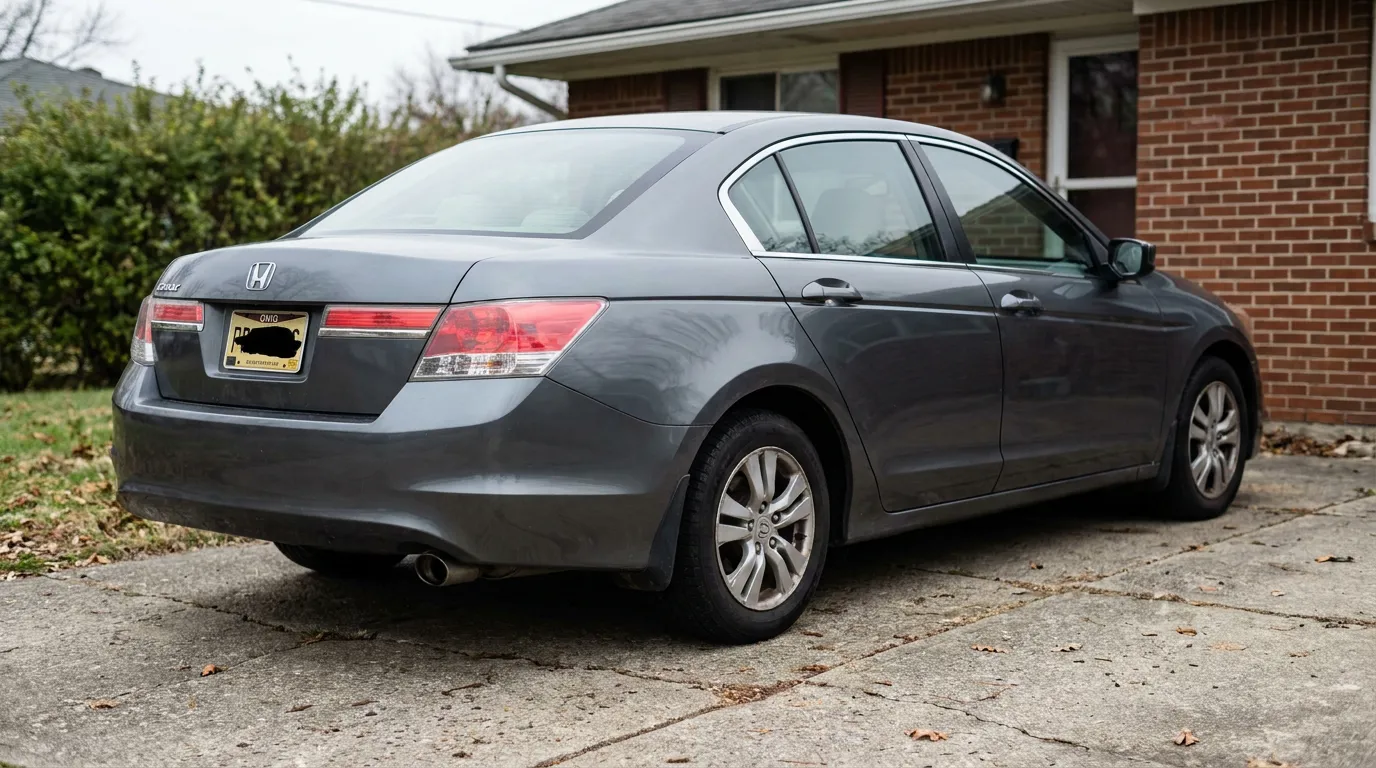
The consequences of a mandatory plate order are as much social as legal. The plates currently used in Ohio are yellow with scarlet lettering and are visible to neighbors, coworkers, clients, and anyone in a parking lot. Many drivers report this visibility is among the hardest parts of an OVI resolution. Some also report increased attention from law enforcement, since the statute expressly calls for plates readily identified by officers.
Insurance and employment effects can follow as well. Ohio OVI penalties frequently extend beyond fines and jail exposure into insurance rating, employer policies for company drivers, and professional licensing obligations. These downstream effects are practical realities that a defense strategy should account for from the outset.
💡 Pro Tip: If your job involves driving a personal vehicle for work, raise that with your attorney immediately. The employer-vehicle exception in ORC § 4503.231(B) is written around employer-owned vehicles, so personal-vehicle arrangements generally do not qualify.
Building a Defense Before the Plate Order Is Entered
The most effective time to address restricted plates is before sentencing, not after. Because the plate condition is tied to the division of conviction and resulting suspension tier, the analysis begins with the charge itself. A cincinnati dui attorney reviewing a high-test case will typically examine the stop, field sobriety testing, observation period, instrument calibration records, and whether the chemical test was administered in substantial compliance with regulations.
Challenges to a high-tier result do not always eliminate the case, but they can change the tier. If a high-test reading is suppressed or successfully contested, the remaining charge may fall outside divisions that trigger the mandatory plate order.
Timing also matters for administrative deadlines. An administrative license suspension is challenged by appeal in the criminal case. Ohio law generally requires that appeal to be raised at the initial appearance or within thirty days, and courts apply those deadlines strictly.
Frequently Asked Questions
1. What breath test level makes an OVI a "high test" case in Ohio?
Under ORC § 4511.19(A)(1)(h), a breath concentration of 0.17 or more per two hundred ten liters of breath falls in the high tier.
2. Can I get limited driving privileges without restricted plates after a high-test OVI?
Generally, no, if the statutory trigger applies. ORC § 4510.13(7) independently requires that where a judge or mayor grants limited driving privileges to an offender suspended under qualifying divisions of ORC § 4511.19(G), the court shall impose the restricted plate condition as part of those limited driving privileges.
3. Can I cover or repaint the plates so they look normal?
No. ORC § 4503.231(A) prohibits knowingly disguising or obscuring the color of a restricted plate, and doing so may create additional legal exposure.
4. Where do I get restricted plates in Hamilton County?
Drivers apply through deputy registrar locations, with plates issued upon court approval. Your attorney or the court’s order will typically explain the process.
5. Does a prior OVI conviction make things worse?
Yes. ORC § 4511.192 addresses drivers with a prior OVI conviction within the preceding twenty years who refuse testing, noting increased penalties upon a subsequent state OVI conviction.
Where This Leaves You
Party plates are mandatory in many Cincinnati high-test OVI cases, but "mandatory" applies to a specific statutory pathway rather than every OVI arrest. The plate condition under ORC § 4503.231 attaches when ORC § 4510.13(7) triggers the requirement for offenders granted limited driving privileges under qualifying suspension tiers of ORC § 4511.19(G), most commonly in high-tier BAC, refusal, and repeat-offense situations. The strongest opportunity to influence the outcome usually comes early, while the charge and chemical evidence are still open to challenge.
If you are facing a high-test OVI in Hamilton County and want a clear assessment of your exposure, Yonas & Phillabaum is ready to help. Call 513-427-6100 or reach out through our contact page to discuss your options with a defense team that understands how Ohio party plates OVI rules work in local courts.
This is not legal advice; this is a legal advertisement.