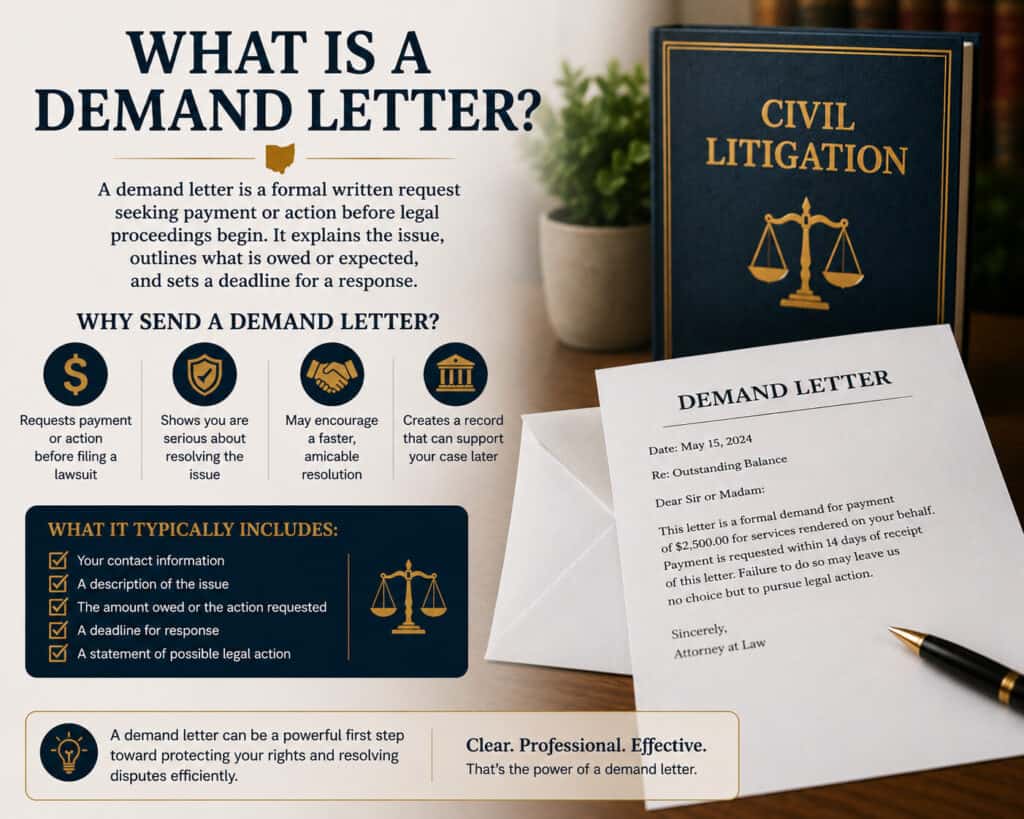
What Is a Demand Letter?
If you have ever been in a car accident, dealt with a contractor who never finished the job, or chased down money someone owes you, you may have heard the term “demand letter.” It sounds formal, maybe even intimidating. But at its core, a demand letter is a clear, written request that puts another party on notice and asks them to make things right.
At Yonas & Phillabaum, we use demand letters regularly to help Ohio consumers resolve disputes before they ever reach a courtroom. Here is what you should know.
The Basics
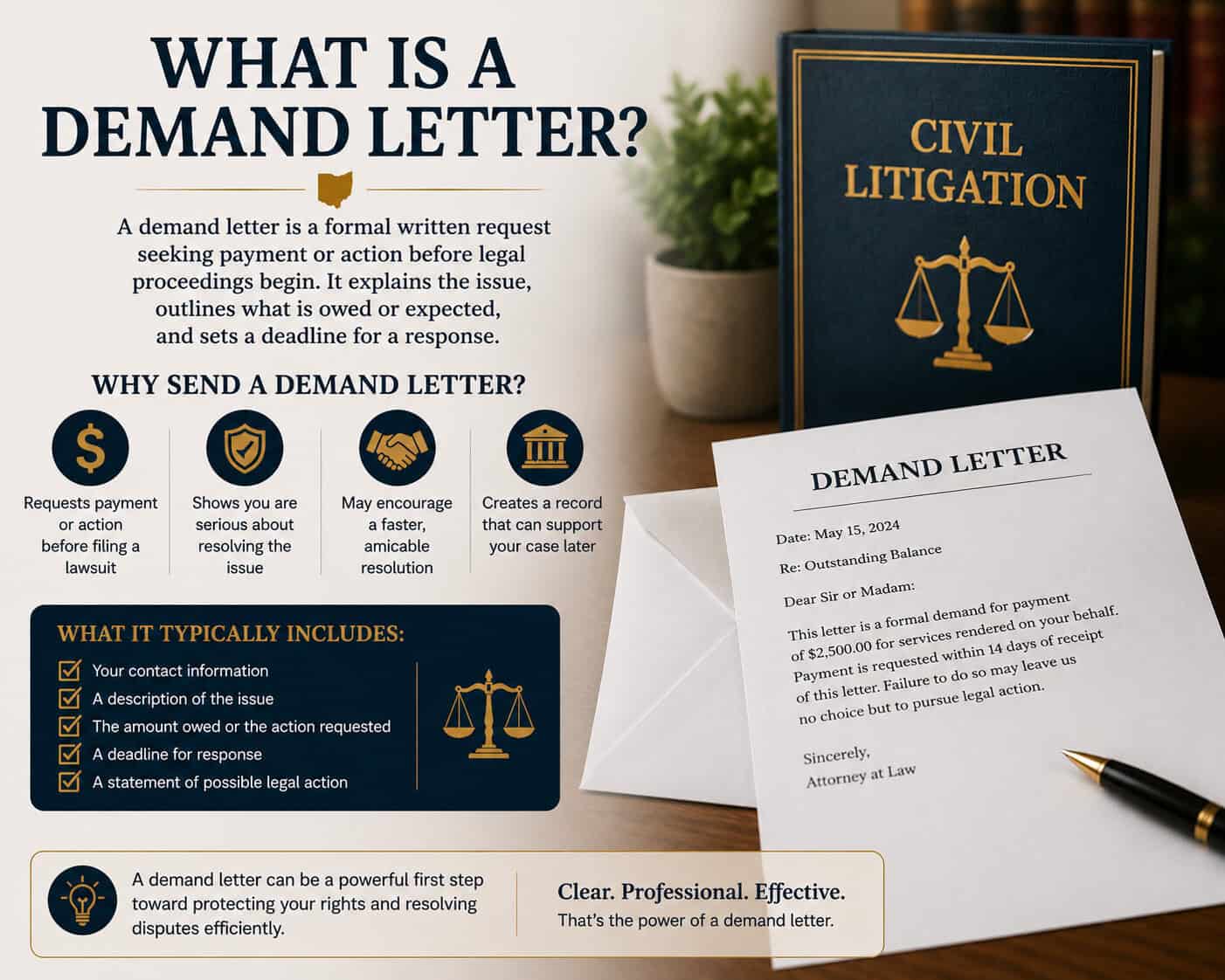
A demand letter is a formal document, usually written by an attorney, that explains a dispute and states what you want the other party to do. That “demand” might be a payment, a repair, the return of property, or a settlement for an injury.
Think of it as the opening move in resolving a conflict. Instead of jumping straight into a lawsuit, a demand letter gives the other side a chance to respond, negotiate, or settle. It signals that you are serious, organized, and prepared to take further action if needed.
When Is a Demand Letter Used?
Demand letters show up in all kinds of everyday situations. A few common examples for Ohio consumers include:
- Car accidents. After a crash, you might send a demand letter to the at-fault driver’s insurance company outlining your medical bills, vehicle damage, lost wages, and pain and suffering.
- Property damage. If a neighbor’s tree falls on your fence or a contractor damages your home, a demand letter can request repair costs.
- Unpaid debts. When someone owes you money and stops responding, a demand letter formally requests payment by a set deadline.
- Contract disputes. Say you hired a company to install a new roof, paid in full, and the work was never completed. A demand letter can ask them to finish the job or refund your money.
- Injury-related matters. If you slipped and fell at a business and got hurt, a demand letter can lay out your injuries and the compensation you are seeking.
In each case, the letter creates a paper trail and opens the door to a resolution without the time and expense of court.
What Does a Demand Letter Typically Include?
While every situation is different, most demand letters share a few key parts:
- A clear summary of the facts. This explains what happened, when, and who was involved.
- The legal basis for the claim. This describes why the other party is responsible, whether through negligence, breach of contract, or another reason.
- The damages or losses. This lists the harm you suffered, such as bills, repair costs, or lost income, often with supporting documents.
- The specific demand. This states exactly what you want, like a dollar amount or a required action.
- A deadline. This sets a reasonable time frame for the other party to respond.
A well-written demand letter is firm but professional. It avoids exaggeration and sticks to facts, which makes it far more persuasive.
Why Demand Letters Matter
A strong demand letter can do a lot of work before anyone ever steps into a courtroom. Here is why it carries weight:
- It encourages settlement. Many disputes resolve at this stage because the other party would rather negotiate than face a lawsuit.
- It shows you mean business. A letter from an attorney signals that you understand your rights and are prepared to pursue them.
- It creates a record. If the matter does go to court, your demand letter becomes evidence that you tried to resolve things fairly.
- It can speed things up. Insurance companies and businesses often act faster when they receive a formal demand with a deadline.
How It Can Affect Your Case
A demand letter often sets the tone for everything that follows. A clear, well-supported letter can lead to a faster settlement and a better outcome. A weak or sloppy one, on the other hand, may be ignored or used against you.
That is why many Ohio consumers choose to work with an attorney rather than sending one on their own. An experienced lawyer knows how to frame the facts, calculate fair damages, and apply the right legal pressure, all while keeping your interests protected.
A Smart First Step
A demand letter is not a guarantee of success, and every case is unique. But it remains one of the most effective tools for resolving disputes early and on fair terms. Whether you are recovering from an accident, dealing with a broken contract, or trying to collect money you are owed, a thoughtful demand letter can make a real difference.
If you are facing a dispute and wondering about your options, the team at Yonas & Phillabaum is here to help you understand your rights and decide on the best path forward.