by Hope Platzbecker
As an increasing number of unmarried couples purchase real estate together, this creates financial risks for the parties in the event the relationship ends, and the property needs to be sold. Unlike married couples, unmarried couples do not have the option of divorce proceedings to determine an equitable distribution of the couple’s property.
This can result in financial loss for one party, particularly if that individual disproportionately contributed to the purchase price, down payment, or ongoing costs and expenses of the property. When unmarried co-owners cannot agree on how to sell the property voluntarily, the alternative is a legal process known as a land partition action. A partition action is essentially a forced sale of the property in which the court determines how the funds will be distributed when the property is sold. Courts generally divide the proceeds according to the ownership interests in the property.

What Is a Tenancy in Common Agreement?
Our attorneys have created what we refer to as a Tenancy in Common Agreement, essentially, a prenup agreement for the home. While the parties are cooperative, we create an agreement that outlines how the proceeds of a future sale would be divided. This agreement can take into account several important factors, including who contributed the down payment, who will be responsible for monthly mortgage payments, and the terms under which one party may buy out the other.
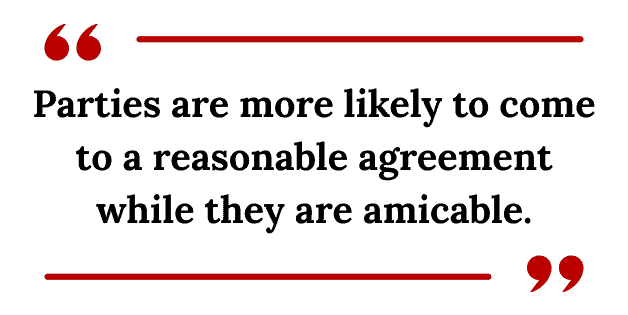
Parties are more likely to be able to come to a reasonable agreement while they are amicable and starting the homeownership phase of life, compared to after the relationship has soured. A well-drafted agreement protects both parties and provides clarity on financial responsibilities and rights from the outset.
How a Tenancy in Common Agreement Saves Money
The upfront cost of meeting with an attorney and outlining the financial arrangement of the property can save the parties thousands by avoiding a forced sale. If the property is sold pursuant to a land partition action, it may be sold via public auction, private sale, or open-market listing, and while courts supervise the process with appraisals and procedural safeguards, there remains a risk that the proceeds will be less than what a voluntary sale might achieve. After court costs and attorney’s fees are deducted from the proceeds, the remaining amount is divided between the parties, often resulting in a financial loss for everyone involved.
By working with a real estate lawyer for unmarried couples early in the process, co-owners can establish clear terms for property disputes, buyouts, and equitable distribution of proceeds. This proactive approach minimizes the need for costly partition action litigation and preserves the property’s value.
This is not legal advice; this is a legal advertisement.