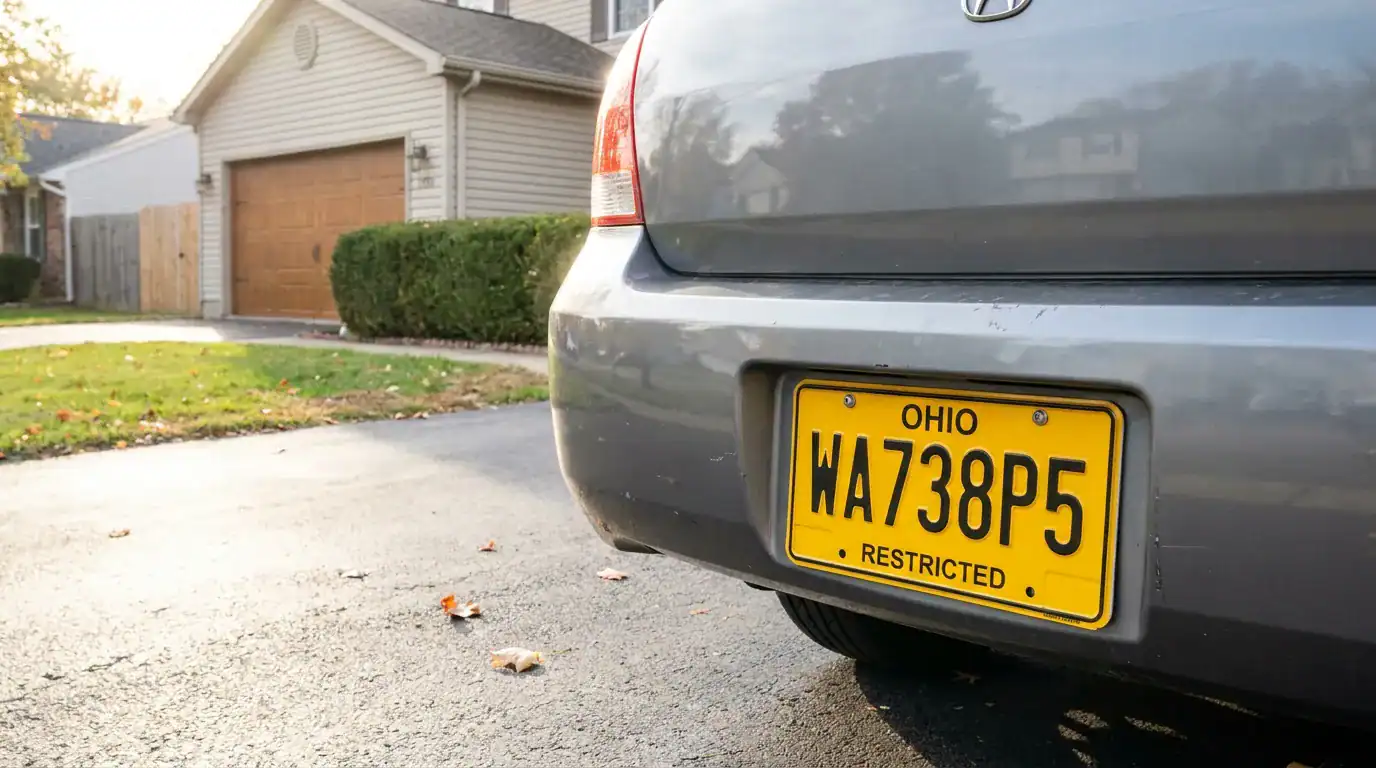
If you have been pulled over or arrested for drunk driving in Ohio, you may have noticed the charge is called an "OVI" rather than a "DUI." Ohio uses the term "operating a vehicle under the influence" (OVI) instead of "DUI," and the distinction is more than just a label. Understanding what OVI means under Ohio law, the penalties you could face, and how to protect your rights can significantly affect the outcome of your case. Whether you are a Cincinnati resident or passing through Hamilton County, knowing how Ohio OVI laws work in 2026 is critical.
If you are facing OVI or other criminal charges in the Greater Cincinnati area, the team at Yonas & Phillabaum is ready to help. Call 513-427-6100 or reach out online to discuss your situation today.
Why Ohio Calls It OVI Instead of DUI
Ohio is one of a handful of states that does not use the term "DUI" in its statutes. Under Ohio Revised Code Section 4511.19, the official title is "Operating vehicle under the influence of alcohol or drugs – OVI." This covers operating any vehicle, streetcar, or trackless trolley while under the influence of alcohol, a drug of abuse, or a combination. The word "operating" is key, unlike states requiring proof of "driving," Ohio’s statute can apply even if a vehicle is stationary.
The practical difference between OVI and DUI comes down to how broadly Ohio defines the offense. Ohio law also addresses "physical control" of a vehicle while impaired under Section 4511.194. Physical control means being in the driver’s position with possession of the ignition key, even if the vehicle is not moving. You could face charges without putting your car in gear, which surprises those who assume they are safe "sleeping it off" in a parked car. Physical control under Section 4511.194 is a separate offense from OVI, carrying distinct penalties.
???? Pro Tip: If you are tempted to rest in your vehicle after drinking, be aware that sitting in the driver’s seat with keys accessible could expose you to an OVI-related charge. Consider alternative arrangements to avoid this risk.

Understanding Ohio’s BAC Limits and Criminal Defense Attorney Strategies
Ohio’s per se blood alcohol concentration (BAC) limit is 0.08%, consistent with the national standard. Under ORC Section 4511.19(A)(1)(b), a BAC between 0.08% and less than 0.17% constitutes a per se violation. Ohio also recognizes a urine alcohol concentration threshold of 0.110%. Importantly, you do not need to "feel" impaired for a per se charge, the number alone can be enough for conviction.
A BAC of 0.17% or higher triggers what is called a "high test" or "high tier" OVI, carrying significantly harsher consequences. Under Section 4511.19(A)(1)(f), this enhanced penalty threshold reflects that extremely high BAC levels warrant more serious treatment. A criminal defense attorney experienced in OVI defense in Cincinnati will scrutinize how BAC testing was conducted, including equipment calibration and officer procedures, because even small errors can affect admissibility.
Underage OVI: Ohio’s Zero-Tolerance Approach
Drivers under 21 face a much lower BAC threshold in Ohio. The statute prohibits persons under twenty-one from operating any vehicle with a prohibited concentration of alcohol. An underage driver can face charges with a BAC of 0.02% or higher (but less than 0.08%); this is charged as "Operating a Vehicle after Underage Alcohol Consumption" (OVUAC) under ORC Section 4511.19(B). OVUAC is classified as a fourth-degree misdemeanor (a criminal offense) and carries penalties including up to 30 days in jail, fines up to $250, and a license suspension of 90 days to 2 years. However, an underage driver who tests at 0.08% or higher faces a standard OVI charge with full criminal penalties. Even OVUAC violations carry consequences including license suspension and fines that can affect a young person’s future.
???? Pro Tip: If your child or family member under 21 has been charged with an underage OVI in Hamilton County, act quickly. Early intervention by a defense attorney may open the door to reduced charges or diversion programs that minimize long-term impact.
OVI Penalties in Ohio: What You Could Be Facing
The penalties for an OVI conviction in Ohio depend heavily on how many prior offenses you have within a 10-year lookback period. A first OVI offense is a first-degree misdemeanor carrying 3 days to 6 months in jail, fines from $565 to $1,075 (with a current mandatory minimum fine of $565 under ORC 4511.19), and a license suspension of 1 year to 3 years (a Class 5 suspension under ORC 4510.02, with ORC 4511.19(G) mandating the one-year minimum). Repeat offenses within ten years carry escalating consequences, including longer mandatory jail terms, higher fines, and potential vehicle forfeiture.
The following table summarizes the key penalty ranges:
| Offense | Jail Time | Fines | License Suspension |
|---|---|---|---|
| First OVI | 3 days to 6 months | $565 to $1,075 | 1 year to 3 years |
| Second OVI (within 10 years) | 10 consecutive days minimum | $525 to $1,625 | 1 to 7 years |
| Third OVI (within 10 years) | 30 consecutive days minimum | $850 to $2,750 | 2 to 12 years; possible vehicle forfeiture |
Driving Under an OVI Suspension
Getting behind the wheel while your license is suspended for an OVI is a separate criminal offense under ORC Section 4510.14. A first offense is a first-degree misdemeanor with a mandatory 3-day jail term, a fine between $250 and $1,000, and 30-day vehicle immobilization. This charge stacks on top of the original OVI consequences, creating a compounding legal problem.
???? Pro Tip: If your license has been suspended following an OVI, explore whether you qualify for limited driving privileges. Courts may grant restricted privileges for work, school, or medical appointments, but you generally must petition for them.
Ohio’s Implied Consent Law and What It Means for You
Under Ohio’s implied consent statute, Section 4511.191, you have already agreed to submit to chemical testing simply by operating a vehicle on Ohio roads. When a law enforcement officer lawfully arrests you for OVI, you may be asked to provide a breath, blood, or urine sample. Refusing to submit triggers administrative penalties, including automatic license suspension separate from criminal penalties. Notably, refusing a test generally results in a longer administrative license suspension than failing one.
However, implied consent does not mean you have no rights during the process. The legality of the traffic stop, the basis for arrest, and testing procedures are all areas where a criminal defense attorney in Cincinnati may identify grounds to challenge evidence. Courts require strict compliance with testing protocols, and deviations can form the basis of a suppression motion.
How Chemical Test Results Can Be Challenged
BAC test results are not always as bulletproof as the prosecution may suggest. Breath testing machines require regular calibration, and blood samples must be drawn and stored according to specific procedures outlined in Ohio’s revised code on OVI. If law enforcement failed to follow proper protocols, a defense attorney may argue that results are unreliable and should not be admitted at trial. This can significantly shift the dynamics of your case.
???? Pro Tip: Write down everything you remember about your traffic stop and arrest as soon as possible, including officer behavior, timing of events, and what you were told. These details can be critical when your attorney evaluates potential defense strategies.
Common OVI Defenses in Cincinnati and Hamilton County
Every OVI case is different, and a strong defense depends on the specific facts surrounding your stop, arrest, and testing. Some commonly raised issues in OVI defense include:
- Whether the officer had reasonable suspicion or probable cause to initiate the traffic stop
- Whether field sobriety tests were administered correctly and under appropriate conditions
- Whether BAC testing equipment was properly calibrated and the sample was handled according to protocol
- Whether your constitutional rights were respected throughout the encounter
An experienced Cincinnati OVI lawyer will evaluate all of these factors before recommending action. In some cases, weaknesses in the prosecution’s evidence may support a motion to suppress, which could result in reduced charges or dismissal. In other situations, negotiating a plea to a lesser offense may be the most practical path to minimizing long-term consequences such as a criminal record, job loss, or increased insurance costs.
???? Pro Tip: Do not assume that a high BAC reading means your case is hopeless. The circumstances of how that reading was obtained matter enormously, and procedural errors by law enforcement are more common than many realize.
Frequently Asked Questions
1. Is an OVI the same thing as a DUI in Ohio?
Functionally, yes. Ohio uses the term OVI (operating a vehicle under the influence) rather than DUI. The offense covers the same general conduct, but Ohio’s statute is broader because it focuses on "operating" rather than "driving," which can include being in physical control of a stationary vehicle.
2. What BAC level triggers an OVI charge in Ohio?
The per se BAC limit is 0.08% for drivers 21 and older. Drivers under 21 can face underage alcohol-related charges at a BAC of 0.02% or higher (but less than 0.08%). A BAC of 0.17% or higher results in enhanced "high tier" OVI penalties.
3. Can I refuse a breathalyzer test during an OVI stop?
You can refuse, but there are consequences. Under Ohio’s implied consent law, refusal triggers an automatic administrative license suspension typically longer than the suspension for failing the test. Your refusal may also be used against you in court.
4. How far back does Ohio look at prior OVI convictions?
Ohio uses a 10-year lookback period for OVI sentencing purposes. Prior convictions within that window result in escalating penalties, including longer mandatory jail terms and higher fines. Ohio also applies a 20-year lookback for a sixth OVI offense and a lifetime lookback for felony OVI classifications. If you have questions about OVIs, consulting with a criminal defense attorney can help you understand where you stand.
5. What should I do immediately after being charged with an OVI in Cincinnati?
Contact a defense attorney as soon as possible. Early legal intervention can preserve critical evidence, protect your driving privileges, and open the door to potential charge reductions. Avoid discussing case details on social media or with anyone other than your attorney.
Protecting Your Future After an OVI Charge in Ohio
An OVI charge in Ohio is serious, but it is not a foregone conclusion. From challenging the legality of the traffic stop to questioning BAC test reliability, there are multiple avenues a skilled criminal defense attorney can pursue. The key is to act quickly, understand your rights, and make informed decisions about your defense strategy. Ohio’s OVI laws carry significant penalties, but the legal process also provides meaningful protections for the accused.
If you or a loved one is facing an OVI or drunk driving charge in Cincinnati or surrounding areas, Yonas & Phillabaum can help you navigate the process. Call 513-427-6100 or contact our team to schedule a consultation and take the first step toward protecting your rights.
This is not legal advice; this is a legal advertisement.