
You check your mail and find a thick, formal envelope waiting for you. Or perhaps a stranger knocks on your door and hands you a stack of papers. You look down and see the word “Summons.” Your stomach drops. You are being sued.
For many people, the immediate reaction is panic. The second reaction is often denial. You might feel tempted to toss those papers in a drawer, block out the stress, and pretend the whole thing never happened. You might hope the problem will simply resolve itself if you wait long enough.
Unfortunately, the legal system does not work that way. Ignoring a lawsuit is one of the most dangerous financial and legal mistakes you can make. It does not make the problem disappear; it actively makes the situation much worse.
In this article, we will walk you through exactly what a lawsuit entails, what happens when you fail to respond, and how severe the financial consequences can be. We will also explain why taking prompt action and securing legal representation can protect your rights, your assets, and your peace of mind.
What Exactly Is a Lawsuit?
Before we dive into the consequences of ignoring a lawsuit, it helps to understand what those legal documents actually mean.
When someone decides to sue you, they become the “plaintiff.” You become the “defendant.” The plaintiff files a document called a “complaint” with the court. This complaint outlines exactly why they are suing you and what they want from you—usually money.
To officially notify you of the lawsuit, the court issues a “summons.” The summons tells you that you are being sued, identifies the court handling the case, and gives you a strict deadline to file your official response.
When you receive a summons and complaint, you are officially on the clock. The court expects you to answer the allegations against you within a specific timeframe, which usually ranges from 20 to 30 days depending on your jurisdiction and the type of case.
The Danger of Doing Nothing: Default Judgments
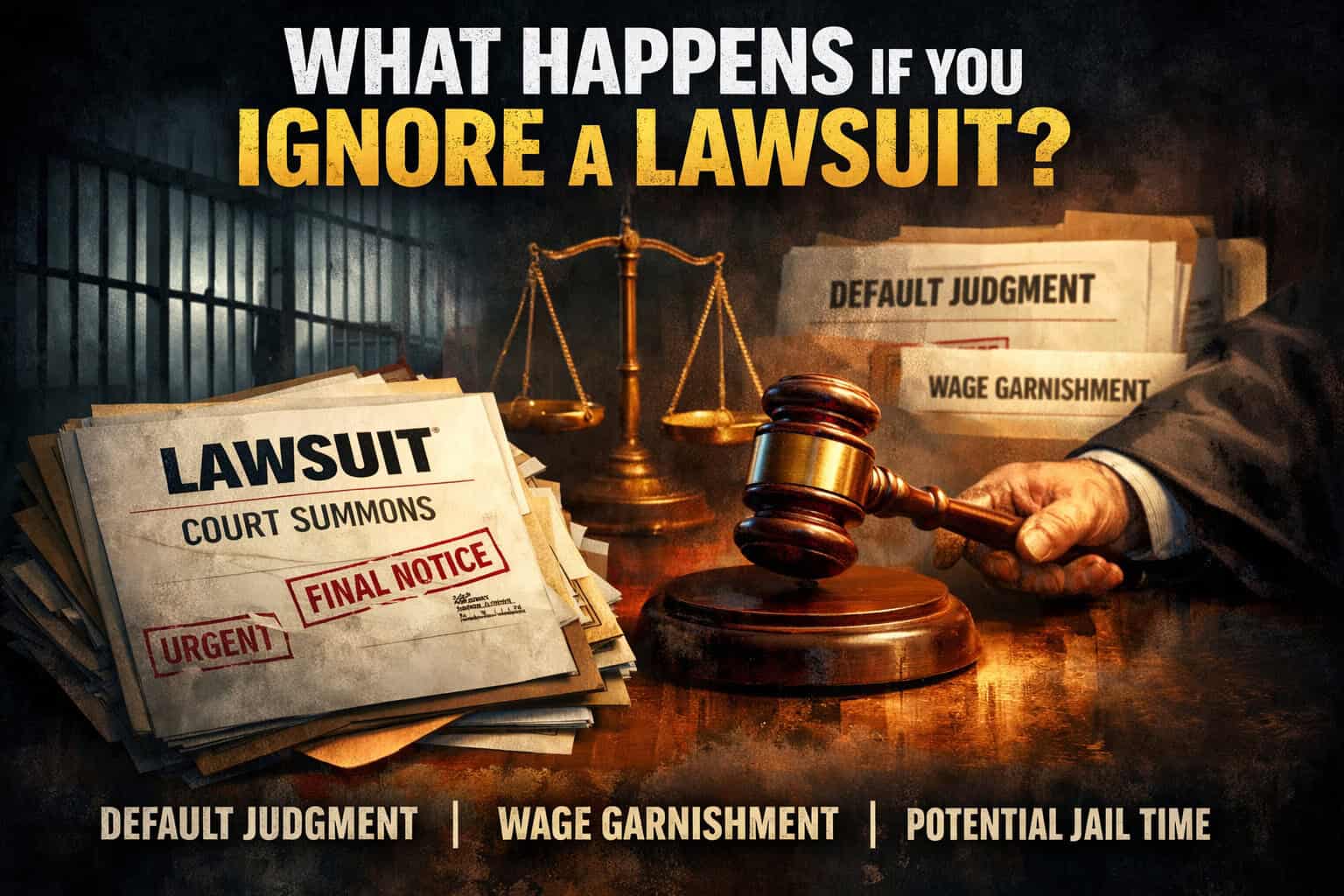
The most immediate and devastating consequence of ignoring a lawsuit is a default judgment.
When you fail to file a formal, written response with the court by the deadline on your summons, the judge assumes you do not contest the claims. You forfeit your right to tell your side of the story. You lose your chance to present evidence, argue against the plaintiff’s claims, or prove that the amount they are demanding is incorrect.
Because you did not show up to defend yourself, the plaintiff can ask the judge to rule in their favor automatically. This is called a default judgment.
Think of it like a sports game. If one team simply refuses to show up to the field, they forfeit the game. The other team wins by default. A default judgment means the person suing you wins everything they asked for in their complaint, and the court makes it a legally binding order.
How a Default Judgment Impacts Your Finances
Wage Garnishment
One of the most common collection methods is wage garnishment. With a default judgment in hand, the plaintiff can obtain a court order directing your employer to withhold a portion of your paycheck and send it directly to them.
This means your hard-earned money gets diverted before you even see it. Federal and state laws cap the percentage of your wages that creditors can take, but losing up to 25% of your disposable income can easily devastate your monthly budget.
Frozen Bank Accounts
If the plaintiff knows where you bank, they can use the default judgment to issue a bank levy. A bank levy freezes the funds in your checking and savings accounts.
Imagine swiping your debit card at the gas station or grocery store, only to have it declined. When you call your bank, you discover your accounts are completely frozen. The funds inside are seized to pay off the judgment.
Property Liens
If you own a home, a car, or other valuable real estate, the plaintiff can place a judgment lien against your property.
A lien acts as a legal claim on your asset. You will not be able to sell or refinance your home without paying off the judgment first. In some cases, a creditor can even force the sale of your property.
Other Serious Consequences of Ignoring a Lawsuit
Severe Credit Score Damage
The underlying debt and aggressive collection actions can severely damage your credit score. This makes it difficult to secure loans, rent property, or even get approved for credit cards.
Loss of Valid Legal Defenses
Many defendants actually have valid defenses. You may have already paid the debt, been sued incorrectly, or the claim may be inaccurate. Ignoring the lawsuit means you lose the chance to present these defenses.
Can You Reverse a Default Judgment?
If a default judgment has already been entered, it may be possible to reverse it. This process is called “vacating” the judgment.
However, this is difficult. You must prove a valid reason for missing the deadline and show that you have a strong defense. This process is far more complex and expensive than responding on time.
Why You Need Legal Representation Promptly
- Filing the Proper Response: Ensures your answer is submitted correctly and on time.
- Evaluating Your Case: Identifies weaknesses in the plaintiff’s claims.
- Negotiating Settlements: May reduce or eliminate the amount owed.
- Protecting Your Assets: Helps safeguard income and property.
Take Action Today
Ignoring a lawsuit will never make it go away. It only makes the situation worse and gives the other party full legal power to pursue your finances.
You have rights, options, and defenses—but only if you act quickly. If you have been served with a lawsuit, seek legal help immediately to protect your future.