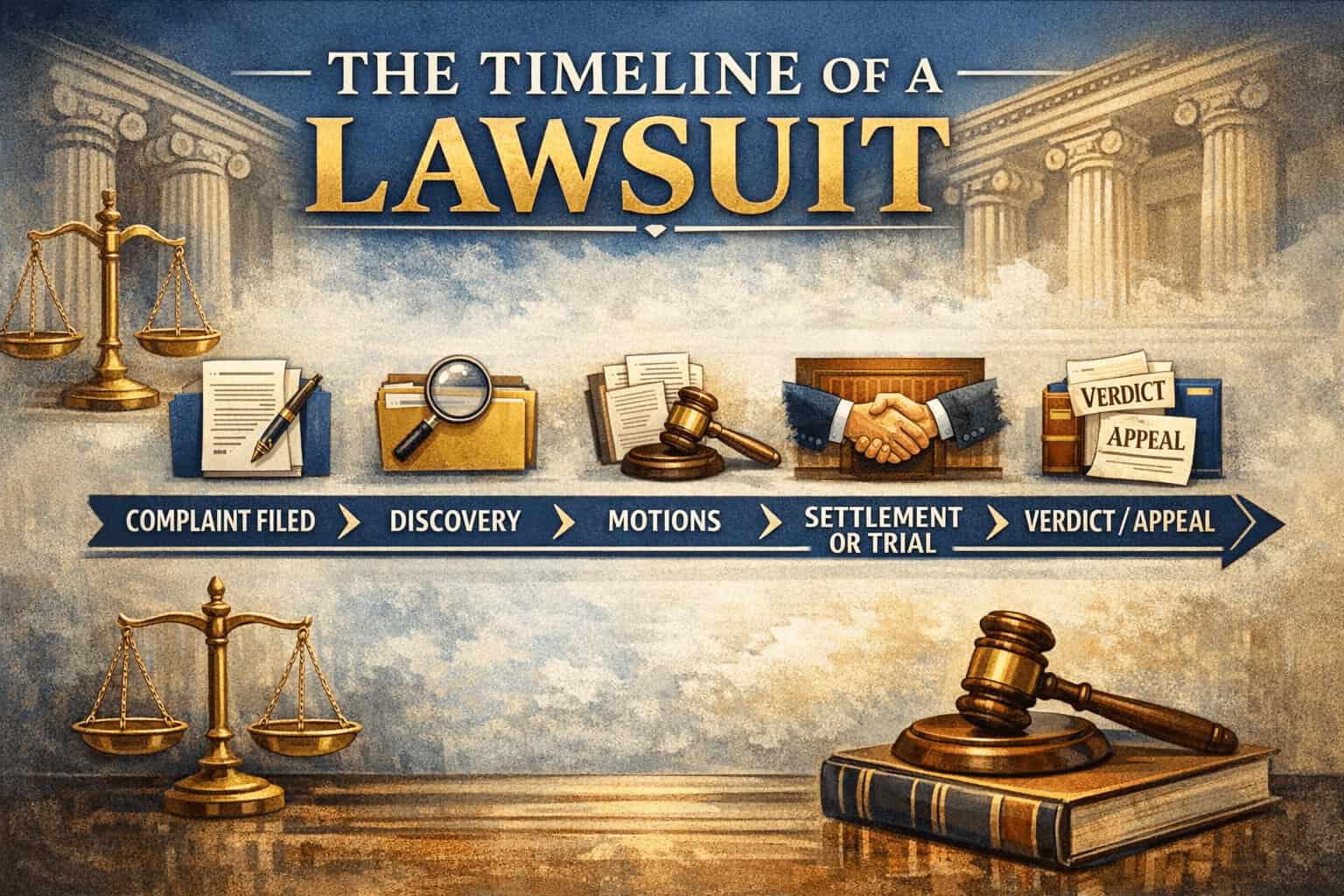
Wondering how long a lawsuit actually takes? It rarely happens as fast as it does on television. While every case is different, here is a realistic look at a typical legal timeline.
1. Filing the Complaint (1–2 Months)
This is where the process begins. One party files formal papers outlining their claims, and the other side is served and given a set timeframe to respond.
2. Discovery (6–12+ Months)
This is almost always the longest phase. Both sides gather and exchange evidence, request documents, and conduct formal interviews called depositions. (Fun fact: Most cases actually end in a settlement during this stage!)
3. Trial (Days to Weeks)
If you cannot reach a settlement out of court, your case goes before a judge or jury. While the trial itself might only last a few days or weeks, waiting for an available court date can take several months.
4. Motions (Varies)
Throughout the lawsuit, either party can file motions, which are formal requests for the court to make decisions on certain issues before trial. Common motions include asking the judge to dismiss part of the case or to decide on specific facts without a full trial. These
motions can lead to delays or even resolve some claims early, depending on what the court decides.
5. Resolution (Varies)
The court reaches a final verdict. However, if the losing side decides to appeal the decision, it can add months or even years to the final timeline. Every case has its own unique twists and turns, and these timeframes can shift based on the specific details of your situation.
Do you need guidance on a potential case? Reach out and consult a qualified legal professional today to get personalized advice and explore your options.
#LegalTips #LawsuitTimeline #Litigation #LegalAdvice #Lawyer