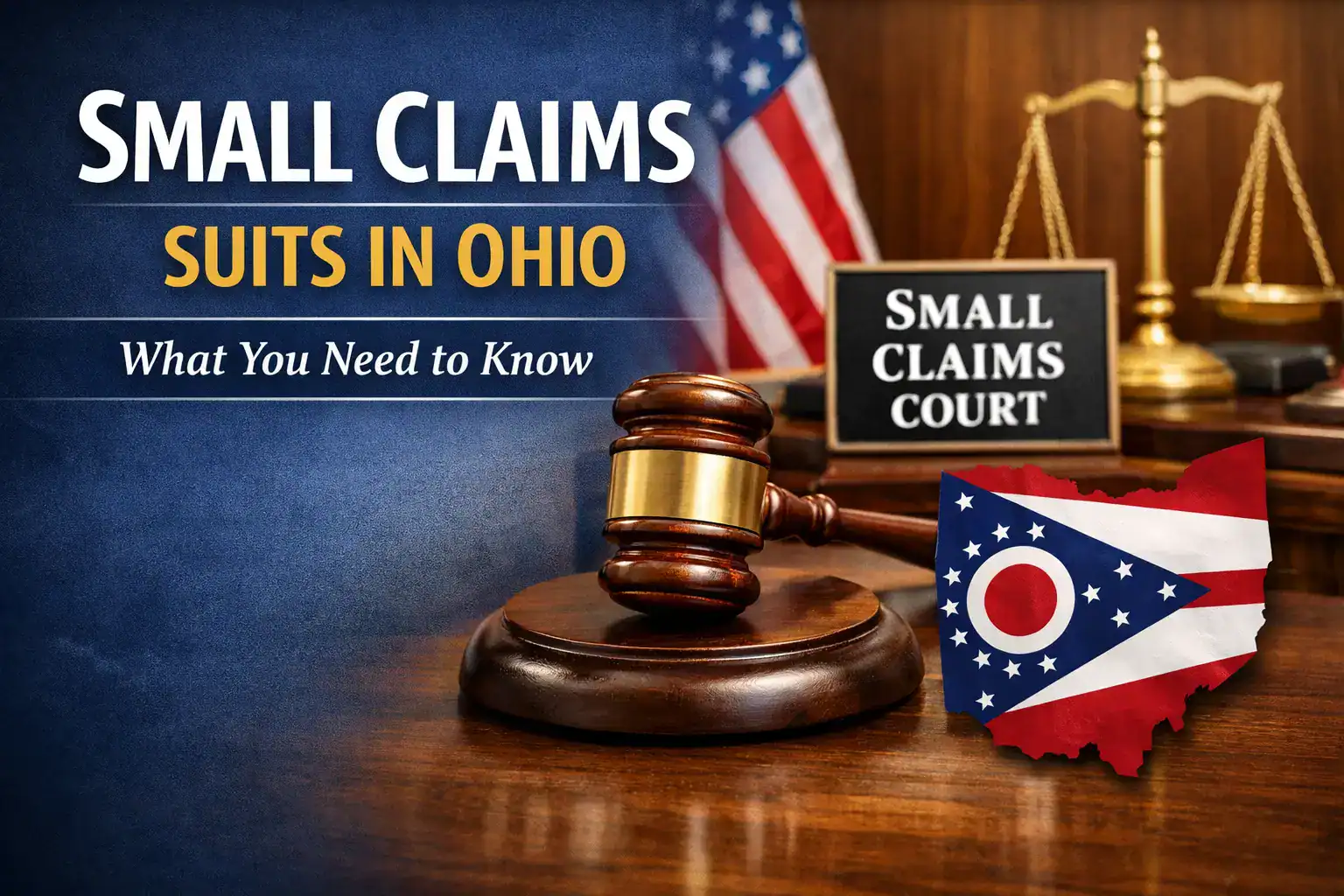
How to Handle a Small Claims Lawsuit in Ohio
Ever had a contractor disappear after taking a deposit? Or maybe a former roommate moved out without paying their share of the rent? You might feel stuck, but you have options.
Small claims court provides a straightforward way to resolve everyday disputes without needing a massive legal budget. If you are thinking about taking legal action, here is a quick overview of how small claims court works in Ohio.
When Does Small Claims Court Make Sense?
Small claims court is designed for relatively simple, low-dollar disputes. In Ohio, you can use this court to sue for amounts up to $6,000. It makes sense to file a claim when you have clear evidence and the money owed is worth your time, but perhaps not enough to justify full-scale civil litigation.
Here are a few common disputes handled in small claims court:
- Unpaid debts: Collecting money loaned to a friend or unpaid freelance invoices.
- Property damage: Getting compensated for a fender bender or damage caused by a neighbor.
- Breach of contract: Holding someone accountable when they fail to deliver a promised service or good.
If your claim exceeds $6,000, or if you want to force someone to do something specific rather than just pay money, you will need to look at other legal avenues.
What Outcomes Can You Expect?
Walking into a courtroom can feel intimidating, but understanding the possible results can help calm your nerves. A small claims case typically ends in one of three ways:
Monetary Judgments
If the magistrate agrees with your case, they will issue a monetary judgment in your favor. This means the court officially orders the other party to pay you. However, collecting the money is a separate process that you must handle yourself if they refuse to pay.
Case Dismissals
If you fail to show up, or if you do not have enough evidence to prove your claim, the court will dismiss the case. A dismissal means you lose the lawsuit and will not recover your money.
Pre-Trial Settlements
Many small claims cases never make it to a hearing. Once the defendant receives the official court summons, they might reach out to settle the debt directly to avoid a formal judgment on their record.
Preparation is Your Best Tool
Winning your case requires more than simply telling your side of the story. You must prove it. Gathering strong evidence is the most critical step you can take.
Before you file, organize all relevant documents. Print out text messages, save emails, gather receipts, and print clear photographs of any damage. The more organized your paperwork is, the easier it will be for the court to understand your position.
Take the Next Step
Do not let the legal system intimidate you. With the right preparation and a clear understanding of the rules, you can confidently navigate small claims court in Ohio.
If you have questions about a specific dispute or need guidance on the best way to protect your interests, reach out to our team today. We are here to help you understand your rights and choose the best path forward.